
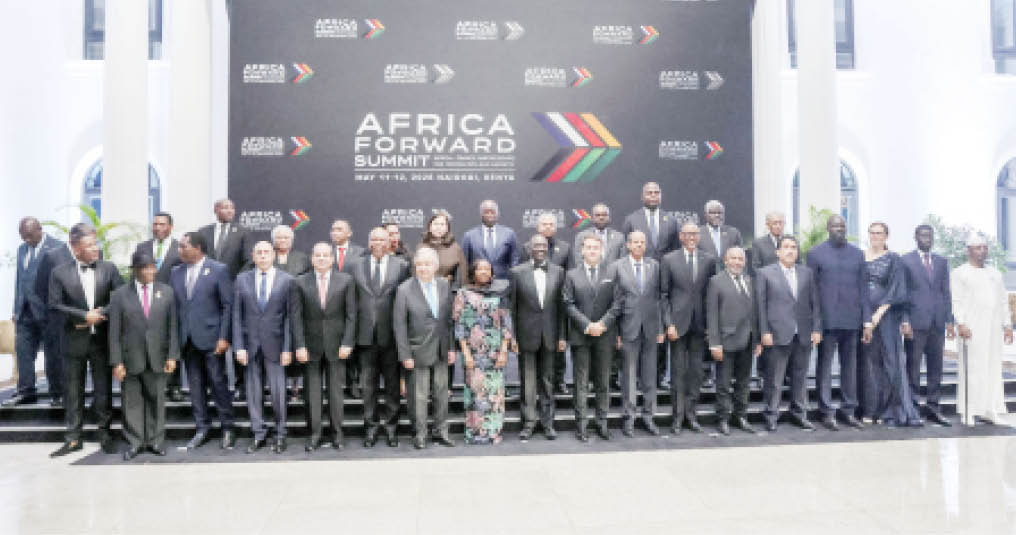
Nairobi — African leaders, economists, and policymakers at the Africa Forward Summit in Nairobi have issued renewed calls for sweeping reforms to the global financial system, arguing that current lending and capital structures are obstructing Africa’s industrialisation and long-term development ambitions.
The summit brought together delegates from 54 African countries alongside international financial stakeholders, with discussions centring on the high cost of capital facing African economies and what participants described as systemic bias within global financial markets.
At the heart of the summit’s deliberations was the issue many delegates referred to as a “prejudice premium” — the disproportionately high borrowing costs imposed on African countries through risk assessments that participants argued often fail to reflect underlying economic fundamentals.
Delegates warned that expensive financing, restrictive lending conditions, and limited access to long-term capital are collectively suppressing Africa’s industrialisation prospects and reinforcing dependency on raw commodity exports.
“Africa’s future will not be built on dependency — but on productivity, integration, and value creation,” the Nairobi Summit communiqué stated.
The summit called for reforms to multilateral lending institutions, sovereign credit rating systems, and broader global capital frameworks to allow African economies greater access to affordable development financing.
However, the discussions were not directed solely outward. Delegates also stressed the need for stronger governance, regulatory stability, respect for contracts, and deeper regional integration within Africa itself.
Participants argued that fragmented markets continue to weaken Africa’s global competitiveness, making the implementation of the African Continental Free Trade Area (AfCFTA) increasingly important to the continent’s economic future.
Another major focus of the summit was the mobilisation of Africa’s own capital pools, particularly pension assets and institutional savings, as a means of reducing dependence on volatile international borrowing conditions.
Delegates also pushed for a broader shift in development financing away from models centred primarily on extraction and emergency funding toward investment in:
- Industrial infrastructure
- Value addition
- Skills development
- Regional supply chains
- Technology and innovation ecosystems.
“The focus of financing must shift — from merely extracting raw materials and funding emergencies, to enabling value addition, infrastructure, skills development, and innovation,” the communiqué stated.
Analysts say the summit reflects growing frustration across the continent over what many African policymakers view as a global financial system that continues to price African economies as permanently high-risk regardless of reforms or fiscal performance.
The broader challenge, observers note, is whether international financial institutions and creditor nations are willing to undertake the structural changes African leaders increasingly argue are necessary for the continent’s long-term economic transformation.