
Washington DC, United States
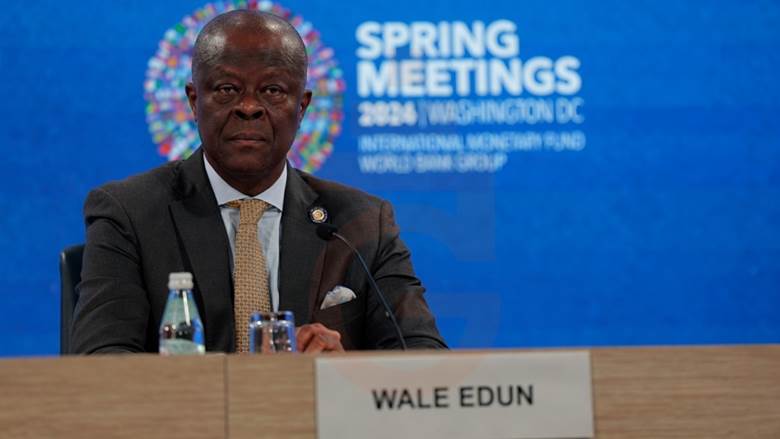
Nigeria’s Minister of Finance and Coordinating Minister of the Economy, Wale Edun, has said the country will not be seeking loans from the International Monetary Fund (IMF) for now, despite growing concerns over rising debt levels. He made this known on Thursday during a ministerial press briefing at the ongoing IMF-World Bank Spring Meetings in Washington DC.
Speaking at the global financial gathering, Edun made it clear that Nigeria is not considering borrowing from the IMF or any other external source at the moment.
“Nigeria has no plans at the moment to approach the IMF or any other source,” the minister said.
His comments come at a time when many African countries are facing serious debt challenges, with some already in or close to debt distress. According to Edun, one of the major problems is the high cost of borrowing, especially from commercial lenders.
He explained that African countries often pay a premium on loans, which puts pressure on government finances. A large portion of revenue, he noted, is now being used to service debt instead of funding critical sectors like healthcare and education.
“The premium they pay for commercial debt is part of the reason for the distress… in terms of the percentage of revenue that goes to debt service, as opposed to health and so forth,” he added.
Edun stressed that addressing these structural challenges is key to improving financial stability across the continent.
The minister’s statement comes just a day after Nigeria’s Debt Management Office (DMO) released new figures showing a sharp rise in the country’s debt profile.
According to the DMO, Nigeria’s total public debt — covering both federal and state governments — increased by N14 trillion, reaching N159.27 trillion as of the end of the fourth quarter of 2025.
At the same time, the National Assembly recently approved a $6 billion external borrowing request, further raising concerns about how sustainable the country’s debt levels are, especially in a volatile global economy.
Edun highlighted that nearly half of African countries are either already in debt distress or at risk of falling into it. He pointed to high interest rates and tough global financial conditions as key factors worsening the situation.
He also noted growing calls for global rating agencies to review how they assess African economies, arguing that current risk ratings often make borrowing more expensive than necessary.
According to him, President Bola Ahmed Tinubu has been pushing for lower risk premiums to make financing more affordable for countries across the continent.
Beyond borrowing, the minister emphasised the need for long-term solutions to reduce reliance on debt.
He said governments must embrace reforms that will strengthen revenue generation and improve efficiency. This includes adopting technology such as artificial intelligence, encouraging private sector participation, and diversifying funding sources.
These steps, he noted, are critical to easing fiscal pressure and supporting sustainable economic growth.
Data from the Debt Management Office shows that Nigeria’s external debt stood at N74.43 trillion as of December 2025, accounting for 46.73% of the country’s total public debt.
In dollar terms, external debt rose from $48.46 billion in September 2025 to $51.86 billion in December 2025, up from $45.78 billion in December 2024.
The Federal Government holds the bulk of this debt at N66.27 trillion, while states and the Federal Capital Territory account for N8.16 trillion.
While Nigeria is steering clear of IMF loans for now, the country’s rising debt profile continues to draw attention. Going forward, how the government balances borrowing, reforms, and economic growth will remain a key issue for policymakers and citizens alike.