
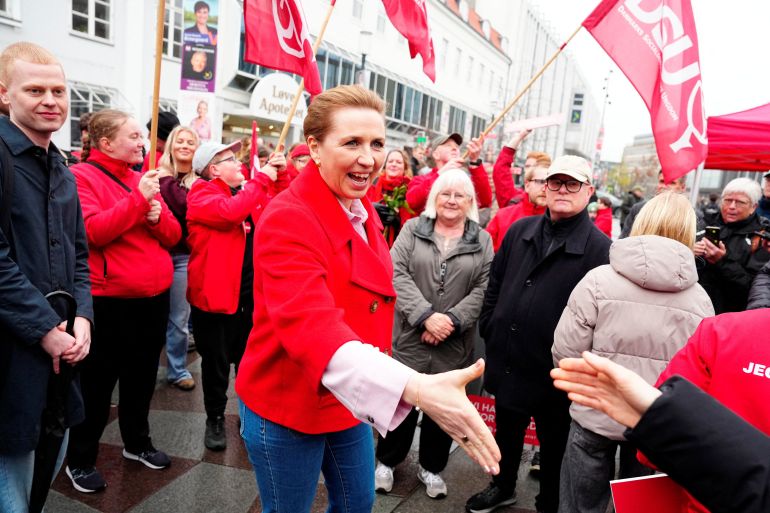
Copenhagen — Denmark’s Prime Minister Mette Frederiksen has emerged from the country’s general election as the leading figure but failed to secure a parliamentary majority, triggering complex coalition negotiations.
Frederiksen’s Social Democrats remained the largest party but recorded one of their weakest performances in decades, forcing the Prime Minister to submit her government’s resignation while seeking to form a new administration.
Coalition Talks Underway
Following the results, Denmark’s monarch has tasked Frederiksen with leading negotiations to form a new government, opening what analysts expect to be weeks of difficult coalition bargaining.
With both left- and right-leaning blocs falling short of a majority, smaller parties are expected to play a decisive kingmaker role in shaping the next government.
Greenland Tensions in Focus
The election outcome comes amid heightened geopolitical tensions over Greenland, a semi-autonomous Danish territory that has drawn renewed interest from the United States due to its strategic and mineral significance.
Frederiksen’s stance against external pressure on Greenland has become a defining issue, reinforcing debates over sovereignty, Arctic security, and Denmark’s role within NATO.
Europe’s Defence Reckoning
The vote also unfolds against a broader European security backdrop, with governments across the continent reassessing defence priorities amid ongoing global conflicts and shifting U.S. strategic focus.
Analysts say the next Danish government will face immediate pressure to balance domestic political fragmentation with external security challenges, including Arctic geopolitics and Europe’s evolving defence posture.
What Next
Frederiksen could still return as prime minister if she successfully builds a coalition, but the outcome remains uncertain as negotiations begin.
The election leaves Denmark at a political crossroads — with leadership continuity possible, but far from guaranteed.