
Abuja, Nigeria
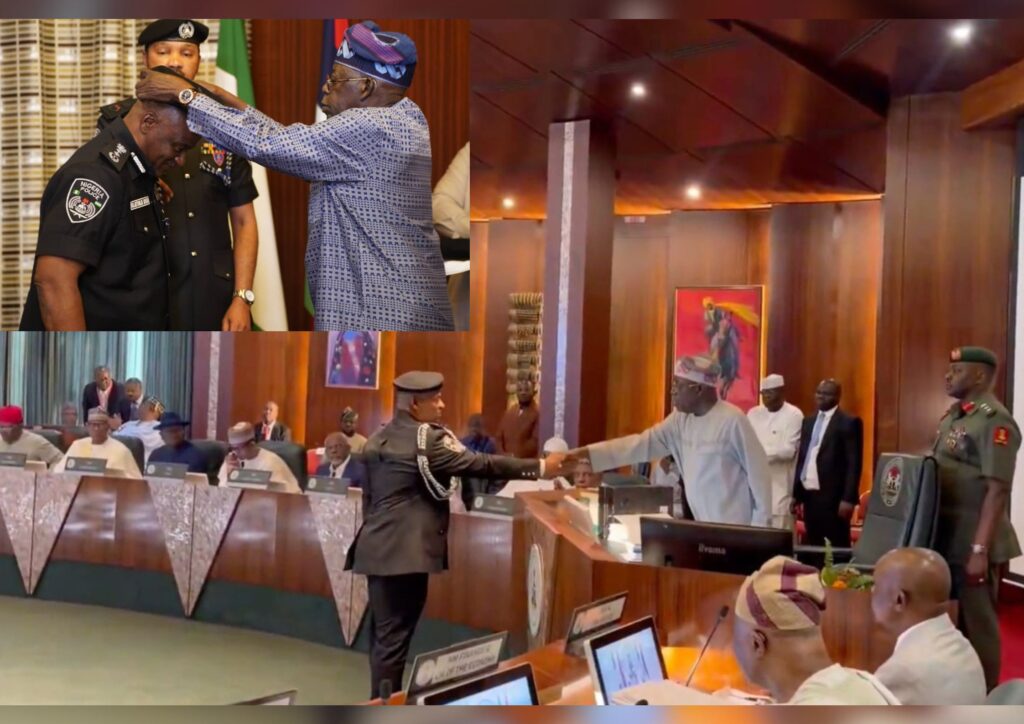
President Bola Ahmed Tinubu on Wednesday officially swore in Tunji Disu as the 23rd Inspector-General of Police (IGP), putting him in charge of the Nigeria Police Force at a time when many Nigerians are still questioning how the police operate.
The swearing-in ceremony took place at the Council Chambers of the State House in Abuja. Top government officials were present, including Vice President Kashim Shettima, Secretary to the Government of the Federation George Akume, Chief of Staff Femi Gbajabiamila, National Security Adviser Nuhu Ribadu, and Head of the Civil Service Esther Walson-Jack.
Disu had been acting as IGP briefly after the former police boss, Kayode Egbetokun, stepped down, citing family reasons. His exit came suddenly, creating a leadership change at a time when Nigeria is dealing with serious security challenges.
Now, Disu takes over fully — and expectations are high.
Many Nigerians have mixed feelings about the police. Complaints of extortion at checkpoints, illegal detention, harassment, and abuse of power are common. In today’s social media age, one video of a bad encounter can spread across the country in minutes.
The Nigeria Police Force was created in 1930 during colonial rule. Since independence in 1960, there have been different reforms and changes. But trust issues have remained.
One major turning point was the 2020 #EndSARS protest. The protests started because of alleged abuse by the Special Anti-Robbery Squad (SARS). The unit was later disbanded, but many Nigerians believe deeper problems in policing still exist.
It is into this atmosphere that Disu steps in.
After taking his oath, Disu met with senior police officers at the Peacekeeping Conference Centre, Force Headquarters, Abuja. His message was direct and simple.
“No officer is above the law,” he said.
According to him, any officer found guilty of corruption, extortion, abuse of power, or illegal arrest — no matter the rank — will face punishment. That could include dismissal from service and prosecution in court.
He made it clear that wearing the police uniform does not give anyone the right to oppress citizens.
“The Nigerian Police Force exists to serve the people, protect the nation, and uphold the rule of law,” Disu said. “These are daily obligations, not just words.”
He added that public trust is very important. If Nigerians do not trust the police, their work becomes harder.
In what many see as an important statement, Disu strongly talked about respecting human rights.
He reminded officers that real authority comes from acting with fairness and restraint, not from force.
“Authority is strongest when exercised with restraint, fairness, and sound judgment,” he said.
He urged officers to treat every Nigerian with dignity — whether rich or poor, powerful or ordinary.
In today’s world, where information spreads quickly, police misconduct does not only affect Nigeria locally. It can damage the country’s international image.
To show he is serious, the new IGP said internal police monitoring units will be strengthened. These include the Force Provost, Complaint Response Unit, and X-Squad.
According to him, these units will be allowed to work independently and act quickly when complaints come in.
“This administration will act firmly, fairly, and transparently to deter misconduct and restore public trust,” he said.
He also promised to review how new officers are recruited, saying only people with good character and proper qualifications should enter the Force.
“Discipline must go hand in hand with training and capacity building,” he explained.
President Tinubu’s confirmation of Disu is part of a wider effort to improve Nigeria’s security system. Since taking office in 2023, the president has repeatedly said security reform is key to economic growth and national unity.
On the same day, he swore in the new IGP, Tinubu also appointed six commissioners of the Revenue Mobilisation Allocation and Fiscal Commission (RMAFC) and two members of the Federal Civil Service Commission (FCSC), filling important federal positions.
The challenges facing the new IGP are not small.
Nigeria is dealing with banditry in the North-West, insurgency in the North-East, kidnapping across several states, and rising urban crime in major cities.
But beyond fighting crime, there is another major challenge: rebuilding public trust.
Security experts say reform is not about speeches alone. It requires:
- Consistent punishment for bad officers
- Transparent investigations
- Better training
- Improved welfare for officers
- Strong community engagement
For many Nigerians, the real test will not be what is said in Abuja, but what happens daily at checkpoints, police stations, and patrol points across the country — from Lagos to Maiduguri.
Will roadside extortion reduce?
Will complaints be handled properly?
Will officers who break the law face real consequences?
These are the questions people are asking.
Every change in leadership brings a chance to reset.
Disu has publicly promised zero tolerance for misconduct. That promise now sets the standard by which his time in office will be judged.
If he follows through with consistent action, it could mark a major turning point for policing in Nigeria. If not, public frustration may deepen.
For now, the message from the 23rd Inspector-General of Police is clear: discipline will be enforced, corruption will not be tolerated, and the police must earn back the trust of the Nigerian people.
Whether that promise turns into visible change on Nigeria’s streets will become clear in the months ahead.