
Abuja
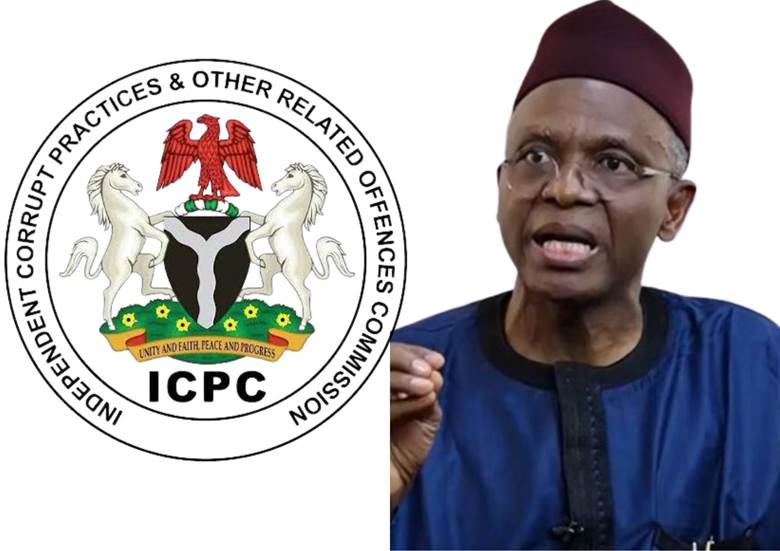
Officials of the Independent Corrupt Practices and Other Related Offences Commission (ICPC) on Thursday searched the Abuja residence of former Kaduna State governor, Nasir El-Rufai, in what marks a significant escalation in the ongoing investigation involving the prominent politician.
The development was confirmed by El-Rufai’s media adviser, Muyiwa Adekeye, who said ICPC officials arrived at the property around 2 p.m. and conducted a search of the premises. Details of what investigators were looking for — or whether any materials were seized — were not immediately disclosed.
The search follows confirmation by the ICPC on Wednesday that El-Rufai was in its custody in connection with an ongoing investigation.
In a statement, the commission’s Head of Media and Public Communications, John Odey, said: “Malam Nasiru El-Rufai, former Governor of Kaduna State, is in our custody as of the close of work today, Wednesday, the 18th day of February, 2026. He is in the custody of the Commission in connection with investigations.”
The anti-corruption agency did not provide specific details about the nature of the allegations under review.
El-Rufai’s lawyer, Ubong Akpan, criticised Thursday’s search, describing it as “unlawful and a clear violation of legal procedures and fundamental rights.” The legal team has not yet indicated whether it intends to challenge the action in court.
The latest development comes amid a string of recent encounters between El-Rufai and federal security agencies.
Last week, the former governor — who is a chieftain of the African Democratic Congress (ADC) — confirmed receiving an invitation from the ICPC. In a post on X, he stated that his lawyer had formally acknowledged the invitation and that he would honour it.
Days earlier, El-Rufai had also visited the headquarters of the Economic and Financial Crimes Commission (EFCC) in Abuja over allegations of financial improprieties during his tenure as Kaduna State governor between 2015 and 2023.
There were additional reports that security operatives attempted to arrest him upon his return from Cairo, Egypt — claims that heightened political tension and public scrutiny.
The situation intensified further after El-Rufai alleged that someone had wiretapped the phone of the National Security Adviser, Nuhu Ribadu, enabling him to intercept instructions relating to his arrest.
Following that claim, the Department of State Services (DSS) reportedly filed a three-count charge against him, alleging unlawful interception of a phone conversation involving the NSA.
Prosecutors said the alleged action contravenes Section 12(1) of the Cybercrimes (Prohibition, Prevention, etc.) (Amendment) Act, 2024 — legislation that criminalises unauthorised interception of electronic communications.
The unfolding events have injected fresh tension into Nigeria’s political space, particularly given El-Rufai’s prominence and his recent public disputes within elite political circles.
While anti-corruption agencies maintain that investigations are routine and guided strictly by law, critics argue that the timing and intensity of enforcement actions against high-profile figures often carry political undertones.
As of Thursday evening, the ICPC had not released further details regarding the investigation or the outcome of the residence search.
For now, the focus remains on due process and legal procedure. Whether the investigation results in formal charges or clears the former governor of wrongdoing will likely shape both legal outcomes and political narratives in the weeks ahead.
Further updates are expected as the case unfolds.