
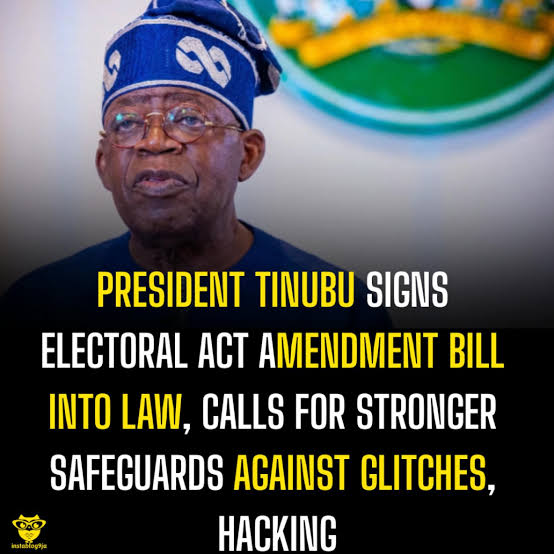
Abuja, February 18, 2026 — President Bola Ahmed Tinubu has signed the Electoral Act 2026 (Amendment) Bill into law, giving legal force to the framework that will govern Nigeria’s 2027 general elections. The signing, which took place at the Presidential Villa, Abuja, follows swift approval by both chambers of the National Assembly.
Key Provisions of the Amended Act
Electronic Transmission of Results: The law now allows INEC to transmit results electronically, introducing a hybrid system that preserves manual collation using Form EC8A as a fallback in areas with network or technical challenges.
Election Timelines: The Act aligns electoral procedures with INEC’s timetable for the 2027 polls — Presidential and National Assembly elections on February 20, and Governorship and State Assembly elections on March 6.
Administrative Adjustments: Changes were made to streamline candidate registration, campaign finance oversight, and constituency-level coordination, aimed at reducing delays and legal disputes during elections.
Political and Public Reaction
Government officials and lawmakers welcomed the signing as a milestone for electoral credibility. Nyesom Wike, Minister of the FCT, described the President’s quick assent as a demonstration of commitment to democratic reform and a means to avert “unnecessary protests” ahead of elections. The National Forum of Former Legislators (NFFL) also praised the law for providing clarity to INEC, political parties, and stakeholders.
However, civil society organisations and some opposition groups expressed reservations over the compromise on electronic result transmission, urging that future amendments mandate real-time reporting from all polling units to strengthen transparency.
Implications for the 2027 Polls
The Electoral Act 2026 is expected to:
Enhance INEC’s operational clarity and reduce litigation risks.
Introduce technological efficiencies in result collation while maintaining manual backups for reliability.
Provide a legal framework for campaign and electoral dispute management, improving overall election preparedness.
INEC is expected to issue detailed implementation guidelines soon, outlining how the hybrid result transmission system will function nationwide. Experts say the success of these reforms will depend heavily on telecommunication infrastructure, training of electoral staff, and compliance by political actors.
Looking Ahead
As Nigeria prepares for the 2027 elections, all eyes are on INEC’s execution of the law, and on whether the amended provisions can enhance transparency and public confidence in a process historically marred by logistical and administrative challenges.