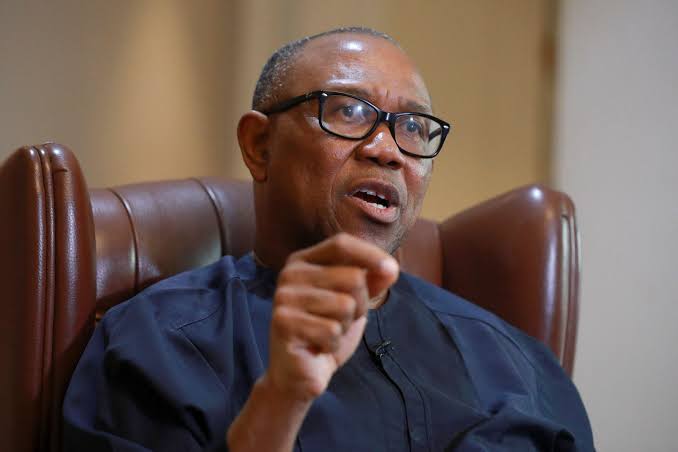
Former presidential candidate and chieftain of the African Democratic Congress (ADC), Peter Obi, has ignited public debate after warning that voters must remain vigilant in protecting their ballots during the 2027 general elections, declaring that
“if any person will not count votes, the person will be counted.”
“In that polling booth in 2027, if they don’t count it, we will count the person” — Peter Obi pic.twitter.com/RXaJsCgtnV
The remark, delivered in the context of urging electoral transparency and civic responsibility, has been widely interpreted as a call for citizens to resist manipulation at polling units. However, critics argue that the phrasing risks being perceived as a threat of violence in a country where election periods have historically been marked by intimidation, clashes, and sporadic bloodshed.
Obi’s supporters insist the statement is metaphorical, reflecting popular political rhetoric that emphasizes voter presence, documentation of results, and peaceful insistence on due process. They argue that the former Anambra State governor has consistently advocated non-violence and institutional reform, and that the comment should be understood as a warning against impunity rather than an endorsement of physical confrontation.
Nevertheless, analysts note that the absence of explicit references to legal or institutional enforcement mechanisms makes the statement strategically ambiguous. “When consequences are implied but not clearly anchored in law, such language can be interpreted as endorsing popular retaliation,” a political communication analyst observed. In fragile electoral environments, experts warn, such rhetoric can be misread or exploited by overzealous supporters.
Nigeria’s electoral history heightens the sensitivity surrounding Obi’s remarks. Past elections have witnessed attacks on electoral officials, ballot snatching, and crowd violence at polling units, prompting concerns that inflammatory language—whether intentional or not—could escalate tensions ahead of 2027.
While the statement does not constitute an explicit call to violence under Nigerian law, governance and security experts caution that political leaders bear a heightened responsibility to frame electoral vigilance in strictly non-violent, legally grounded terms. As Nigeria moves toward another high-stakes election cycle, Obi’s comment underscores a broader dilemma facing the country’s democracy: how to mobilize citizens to defend their votes without crossing the thin line between civic resistance and political intimidation.