
Abuja
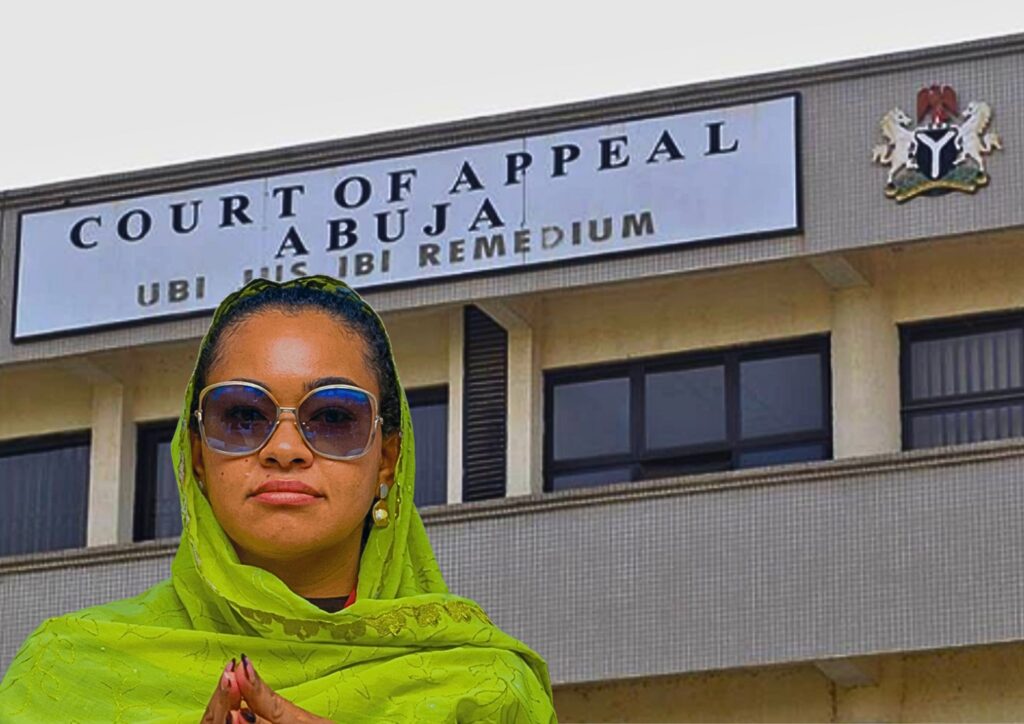
Nigeria’s Court of Appeal has upheld the suspension of Senator Natasha Akpoti-Uduaghan, representing Kogi Central Senatorial District, ruling that the Nigerian Senate acted within its constitutional and procedural powers and did not violate her parliamentary privileges or fundamental rights.
In a unanimous judgment delivered by a three-member panel of justices sitting in Abuja, the appellate court affirmed that the Senate’s decision to suspend the lawmaker followed due process under the Senate Rules. However, the court set aside the contempt proceedings and the ₦5 million fine earlier imposed on the senator, granting her partial relief.
The ruling brings judicial clarity to a dispute that has generated widespread public debate over legislative discipline, freedom of expression, and the limits of parliamentary authority in Nigeria’s democracy.
The legal battle arose from events during a Senate plenary session on February 20, 2025, when Senator Akpoti-Uduaghan sought to speak but was denied recognition by Senate President Godswill Akpabio. The incident later escalated into disciplinary action by the Senate, culminating in her suspension.
The matter drew national attention after the senator issued a satirical apology directed at the Senate President, an action that the Senate interpreted as contemptuous conduct. This led to contempt proceedings and the imposition of a ₦5 million fine, alongside her suspension.
Challenging the Senate’s actions, Akpoti-Uduaghan approached the courts, arguing that her suspension and punishment violated her fundamental rights and undermined her ability to represent her constituents.
Delivering the lead judgment, Justice Abba Muhammed held that the Senate President acted strictly within the powers conferred on him by the Senate Standing Rules when he declined to recognise the senator during plenary.
The court noted that at the time she sought to speak, Senator Akpoti-Uduaghan was not seated at her officially designated seat, a requirement clearly stipulated under Senate procedures.
According to the judgment, the Senate Rules empower the presiding officer to assign seats to lawmakers and to restrict floor contributions to members speaking from their allocated positions.
“The Senate President was right to enforce the Rules,” the court held.
The justices stressed that internal parliamentary procedures exist to maintain order, discipline, and effective legislative business, and courts should be slow to interfere where such procedures are lawfully applied.
Importantly, the panel ruled that the senator’s parliamentary privileges and fundamental rights were not breached, affirming the Senate’s authority to discipline its members in accordance with its internal rules.
While upholding the suspension, the Court of Appeal departed from the Senate’s position on the contempt charge.
The judges ruled that the circumstances surrounding the satirical apology did not justify the contempt finding or the financial penalty imposed on the senator. As a result, the court vacated both the contempt ruling and the ₦5 million fine, effectively relieving Akpoti-Uduaghan of those sanctions.
This aspect of the judgment draws a distinction between legitimate legislative discipline and punitive measures that may overreach, even within parliamentary settings.
The ruling reinforces the long-standing principle that the legislature has the constitutional authority to regulate its internal affairs, including disciplining members who violate its rules.
At the same time, the court’s decision to overturn the contempt sanction signals that such powers are not unlimited and must be exercised proportionately and within clearly defined legal boundaries.
Legal analysts say the judgment provides guidance on the delicate balance between maintaining order in the National Assembly and safeguarding lawmakers from excessive punitive action.
The case has been closely followed by civil society groups, legal practitioners, and political observers, many of whom viewed it as a test of how far legislative bodies can go in enforcing discipline without infringing on democratic representation.
For constituents of Kogi Central, the dispute also raised questions about representation and accountability, as prolonged suspensions can limit a senator’s ability to perform legislative duties.
As of the time of filing this report, the Senate has not issued an official response to the Court of Appeal judgment. It remains unclear whether any further legal steps will be taken by either party.
What is clear, however, is that the ruling closes a significant chapter in a controversy that has spotlighted internal parliamentary conduct, the authority of presiding officers, and the role of the judiciary in interpreting legislative powers.
The judgment now stands as a key reference point in Nigeria’s evolving constitutional and parliamentary jurisprudence.