
Kano, Nigeria
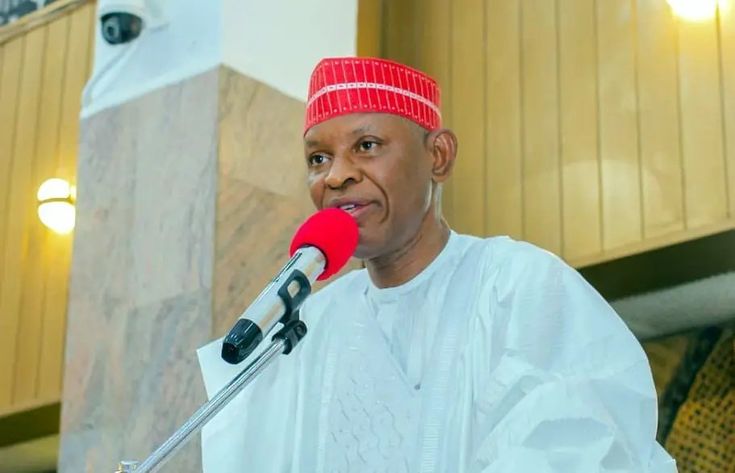
Kano State Governor Abba Kabir Yusuf has restructured his political team, replacing his Political Adviser, Sunusi Surajo Kwankwaso, in a move that underscores the depth of the political realignment currently unfolding in Nigeria’s most politically influential northern state.
The decision comes barely 24 hours after the governor formally resigned from the New Nigeria People’s Party (NNPP), a dramatic development that has triggered a wave of defections across Kano’s political structure and intensified national attention on his next political destination.
While the state government has yet to issue a detailed statement explaining the reshuffle, political observers see the change as an early but significant step in recalibrating Yusuf’s political machinery as he navigates life outside the party that brought him to power.
Governor Yusuf’s resignation from the NNPP on Friday marked one of the most consequential political moves in Kano since the 2023 general election. In a letter submitted to his ward chairman in Diso-Chiranchi, Gwale Local Government Area, the governor announced his decision to leave the party with immediate effect.
The exit was not a solitary act. Reports indicate that the governor was joined by 21 members of the Kano State House of Assembly, eight federal lawmakers, and 44 local government chairmen, a coordinated movement that reflects a major fracture within the NNPP’s Kano structure and signals the emergence of a new political bloc.
Kano, long regarded as a kingmaker state in Nigerian politics due to its population and voting strength, has historically set the tone for political alignments in the North. Yusuf’s move, therefore, carries implications far beyond state borders.
The replacement of Sunusi Surajo Kwankwaso as Political Adviser adds a personal and symbolic layer to the unfolding drama. Kwankwaso, a key political ally and long-time associate of the Kwankwasiyya movement, confirmed his exit from the administration shortly after the governor’s resignation became public.
In a statement, he said he would not follow Yusuf into another political platform, choosing instead to remain loyal to the Kwankwasiyya political movement led by former governor and NNPP presidential candidate, Senator Rabiu Musa Kwankwaso.
“I remain committed to the ideals and leadership of the Kwankwasiyya movement,” he said, effectively drawing a line between the governor’s new political path and the movement that shaped Kano politics for over two decades.
His departure is widely seen as emblematic of the broader split now playing out between the political establishment around Yusuf and the loyalists of Senator Kwankwaso, whose influence remains deeply rooted in the state.
In response to the vacancy, Governor Yusuf has approved the appointment of Mustapha Bakwana as the new Political Adviser, according to multiple sources within the Government House. Bakwana is expected to assume duties immediately and help manage relations with political stakeholders, lawmakers, and local government structures during what many describe as a delicate transition period.
Although little has been officially said about Bakwana’s mandate, insiders say his appointment is aimed at stabilizing political coordination within the government and preparing the ground for broader negotiations as the realignment process continues.
The move suggests that the Yusuf administration is prioritizing internal cohesion and strategic outreach at a time when alliances remain fluid and loyalties are being tested.
The governor’s resignation has exposed existing fault lines within the NNPP itself. While several state and federal lawmakers have publicly aligned with Yusuf, the party’s founder, Dr Boniface Aniebonam, has insisted that the governor merely withdrew from the Kwankwasiyya movement and not from the NNPP as a political party.
That interpretation has been rejected by multiple party officials in Kano, who argue that Yusuf’s letter was clear and unambiguous. The disagreement has further weakened the party’s cohesion in the state and raised questions about the future of its political relevance outside the Kwankwasiyya stronghold.
For a party that emerged as a third-force challenger in the 2023 elections, the Kano crisis represents a critical test of survival.
Political realignments in Kano rarely remain local. The state’s electoral weight and history of shaping national outcomes mean that Yusuf’s next move will be closely watched by both the ruling party and the opposition.
With 2027 still some distance away, the governor’s immediate focus appears to be on consolidating control of the state’s political structure while maintaining administrative stability. However, the scale of defections already recorded suggests that broader negotiations are underway, even if they remain behind closed doors.
Analysts say the coming weeks will be crucial in determining whether the realignment results in a new political coalition or simply reshuffles existing loyalties under a different banner.
For now, the replacement of a political adviser may appear procedural. But in the context of Kano’s political history, it is a clear signal that a larger transformation is in motion.
As Governor Yusuf steadies his administration amid shifting alliances, one thing is clear: Kano has entered a new political phase, one that could redefine power structures within the state and influence the national political landscape in the years ahead.
Whether this realignment leads to renewed stability or prolonged contestation will depend on how effectively the governor manages the delicate balance between governance and politics in the weeks to come.