
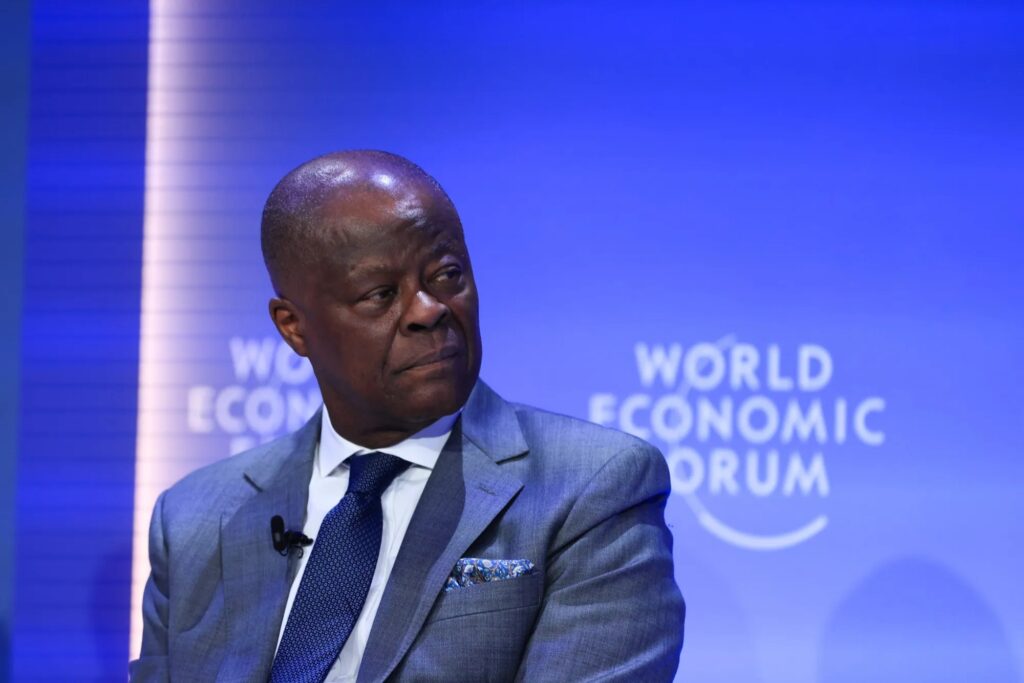
Nigeria’s Finance Minister, Wale Edun, says the federal government intends to intensify domestic resource mobilisation and reduce dependence on external borrowing as part of its current fiscal strategy.
In an interview with Bloomberg Television at the World Economic Forum in Davos on Tuesday, Edun said that while Nigeria retains access to international bond markets, the administration prefers to fund growth from internal capital pools.
The issue now is to focus on revenue, focus on domestic resource mobilization. We’re hoping to rely less on borrowing, he stated.
Nigeria, Africa’s largest oil producer, returned to the eurobond market in November, raising $2.35 billion via 10- and 20-year instruments. Edun said Abuja holds “the latitude” to undertake additional issuances if required, but stressed that the prevailing focus is on investment and driving domestic savings into productive sectors.
“Our emphasis is on investment and particularly driving domestic investment, increasing domestic savings for investment in the Nigerian economy in order to grow it,” he said, noting ongoing engagements with prospective investors from the Middle East.
Since assuming office in 2023, President Bola Tinubu’s government has implemented extensive market-oriented reforms, including liberalisation of the foreign exchange regime and removal of the petrol subsidy. The measures are intended to unlock investment and improve macroeconomic fundamentals, though they have exerted short-term inflationary and social pressures.
On Monday, the International Monetary Fund upgraded its projection for Nigeria, forecasting economic growth of 4.4 percent in 2026, up from an estimated 4.2 percent in 2025, despite weaker global oil prices.
A central component of the reform agenda is tax mobilisation. Nigeria currently collects roughly 14 percent of gross domestic product in tax revenue—a relatively low ratio compared to emerging-market peers. Edun said the administration aims to lift the figure to 18 percent of GDP in the short term, positioning the economy to finance a greater share of development spending from domestic resources.