
Mohammed Abdulhammed
Manchester
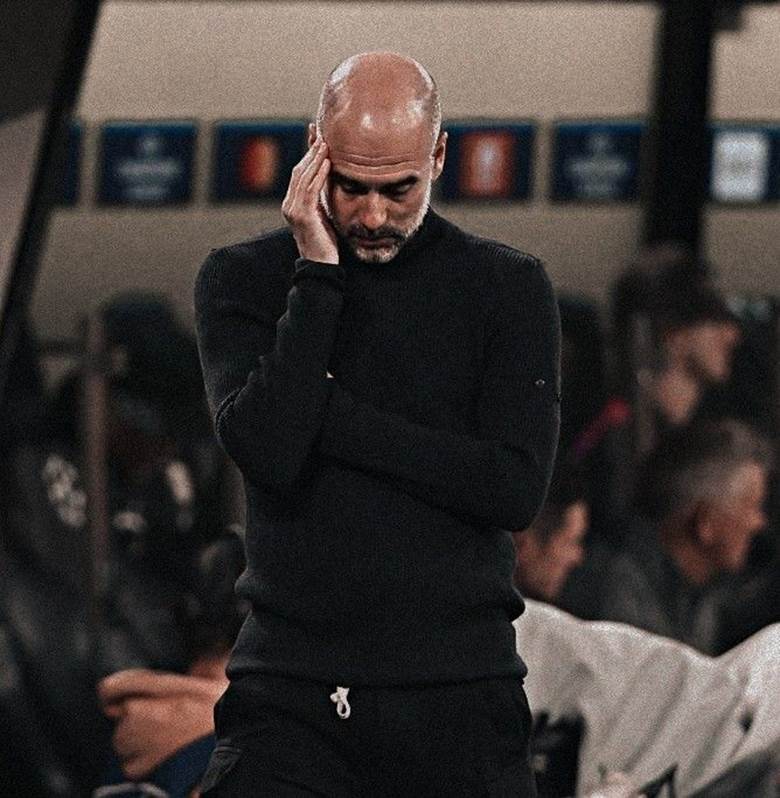
There are good football managers, and then there is Pep Guardiola — a coach whose influence has reshaped modern football and whose success has set standards few may ever match. From Barcelona to Bayern Munich and now Manchester City, the Spanish tactician has built dynasties, broken records, and redefined how elite teams dominate possession, space, and games.
But even the greatest reigns eventually face their moment of reckoning — and for the first time in a decade, that question is now being asked seriously at the Etihad Stadium.
Guardiola, who rose from Barcelona B to the first team in 2008, has won 38 major trophies across his managerial career, including multiple league titles in Spain, Germany, and England, as well as Champions League triumphs that cemented his place among football’s immortals. At Manchester City, he has delivered an era of dominance that has transformed the club into a global powerhouse, making sustained excellence look routine.
Yet the 2024/2025 season ended without silverware — a rare blank year that disrupted the narrative of inevitability surrounding City’s success. As the 2025/2026 campaign unfolds, the rebuild Guardiola initiated has yet to fully click, prompting uneasy questions among sections of the fan base about whether the era may be approaching its natural conclusion.
For nearly ten years, Guardiola’s City have set the rhythm of English football — winning titles with relentless consistency, breaking points records, and controlling matches with machine-like precision. But football, like all high-performance systems, is cyclical.
In recent months, that cycle appears to be turning.
City currently sits seven points behind league leaders Arsenal in the Premier League. While the gap is far from insurmountable, the tone of the season has felt different: less assured, more laboured, and increasingly vulnerable to moments of disruption.
Despite the murmurs, City remains active on multiple fronts. They are on course to reach the next phase of the expanded UEFA Champions League, have advanced to the EFL Cup semi-finals, and remain in the FA Cup, where a deep run is still possible. On paper, a quadruple remains achievable — yet on the pitch, the fluidity and dominance that once defined Guardiola’s City have appeared inconsistent.
That contrast has fueled frustration among supporters who believe the team’s underlying issues have lingered for too long to be dismissed as temporary.
In January, City attempted to reset their momentum with an £83 million investment in the transfer market. The arrivals of Antoine Semenyo from Bournemouth and Marc Guéhi from Crystal Palace were widely viewed as smart, long-term additions — players capable of injecting energy, athleticism, and defensive solidity into a squad showing signs of fatigue.
But for some fans, the signings raised as many questions as they answered. Was this a refresh, or merely a patch? Could Guardiola still mold a new generation with the same clarity and authority that defined his earlier rebuilds?
Those doubts deepened following a damaging 3–1 defeat to Bodø/Glimt, a result that shocked supporters and revived uncomfortable memories of City’s vulnerability in transitional phases. For critics, it was further evidence that Guardiola’s blueprint may no longer be delivering its customary guarantees.
At clubs like Manchester City, success is not just measured in trophies — it is measured in control. And that sense of control, Guardiola’s greatest weapon, has occasionally slipped.
The challenge now is as much psychological as tactical. After a decade of relentless winning, hunger becomes harder to sustain, motivation harder to renew, and standards harder to reset. Guardiola has rebuilt before — at Barcelona, at Bayern, and early in his City tenure — but never after such an extended period of dominance.
The question is whether this is simply another phase of transition or the beginning of a gradual decline that even the greatest coaches cannot escape.
For now, Guardiola remains defiant, committed, and fully engaged in the project. City’s season is far from over, and history has shown that writing off a Guardiola team is rarely wise. The trophies are still within reach, and momentum can shift quickly in elite football.
But the mood has changed — subtly, unmistakably.
As May approaches, the defining question lingers:
Is this merely a test of Guardiola’s resilience, or the closing chapter of the most successful era in Manchester City’s history?
For the first time in ten years, no one at the Etihad seems entirely sure.