
Abuja
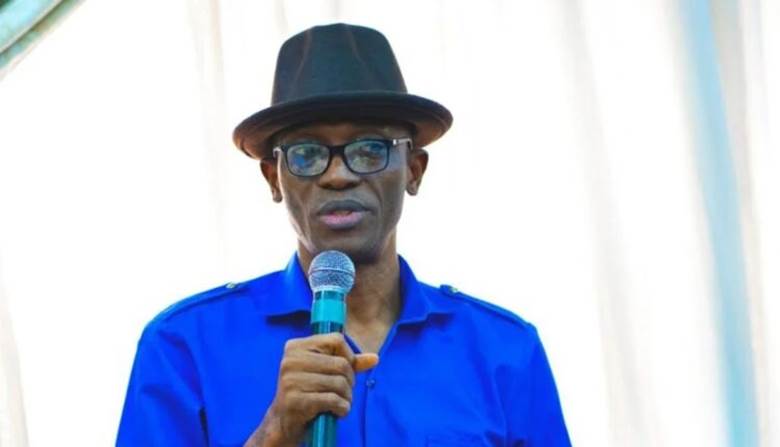
A Federal High Court sitting in Abuja has removed Julius Abure as the National Chairman of the Labour Party (LP), escalating the party’s long-running leadership crisis and opening a new phase of legal and political confrontation within the opposition movement.
The ruling, delivered on Wednesday by Justice Peter Lifu, recognised a caretaker committee led by former Minister of Finance, Senator Nenadi Usman, as the legitimate authority to oversee the affairs of the party. The decision was anchored on an earlier judgment of the Supreme Court delivered on April 4, 2025, which the court said provided a legal basis for its intervention.
In its judgment, the court held that the caretaker committee should manage the Labour Party pending the final resolution of ongoing disputes over its leadership, effectively terminating Abure’s tenure and stripping his faction of formal recognition.
The ruling marks one of the most consequential judicial interventions in the Labour Party’s internal crisis, which has dragged on for months and repeatedly spilled into the courts, weakening party cohesion and public confidence.
The decision triggered an immediate backlash from the faction loyal to Abure, which rejected the ruling and announced plans to challenge it at the Court of Appeal.
Speaking to journalists in Abuja, the faction’s National Publicity Secretary, Obiora Ifoh, described the judgment as legally flawed and inconsistent with established Supreme Court positions on party autonomy.
“Courts do not have the power to decide who leads a political party,” Ifoh said, insisting that the ruling violated the principle that internal party leadership matters should be resolved through party mechanisms rather than judicial intervention.
The Abure faction also raised concerns over the handling of the case, pointing to what it described as irregularities in the judicial process, including the reassignment of judges, the withdrawal of related suits, and what it claimed was a hurried conclusion that denied it sufficient opportunity to fully respond before judgment was delivered.
According to the group, there is no leadership vacuum within the Labour Party, arguing that a national convention held in March 2024 validly elected the current leadership and that Abure’s tenure had not expired.
Beyond the courtroom, internal developments across the party have already pointed to a weakening of Abure’s control, particularly at the state level.
In Kano State, the Labour Party executive recently moved to replace Abure as part of a wider reorganization aimed at restructuring the party, strengthening grassroots mobilization, and positioning it more effectively for future elections.
Party insiders say the move was endorsed by key stakeholders who believe the party requires new leadership to rebuild internal trust and re-align strategy after months of factional disputes and public infighting. While Abure’s replacement has not yet been formally announced, sources confirm that the transition process is underway and a formal statement is expected in the coming days.
Reactions among party members and supporters have been mixed. Some have welcomed the court ruling as a necessary step toward restoring stability and ending a damaging power struggle that has stalled party activities nationwide. Others, however, fear the judgment could deepen existing divisions and trigger further rounds of litigation, weakening the party’s ability to function as a cohesive opposition force.
The Labour Party’s national leadership is expected to issue an official statement in response to the ruling, as both factions remain firmly entrenched in their positions and the legal battle shows no sign of abating.
With an appeal already signaled and rival leadership structures claiming legitimacy, the party faces renewed uncertainty at a time when it is expected to consolidate its position ahead of future electoral contests.
As the legal process continues, the unresolved leadership crisis threatens to distract the party from its core opposition role, raising fresh questions about its unity, organizational strength, and capacity to present a coherent political alternative in the months ahead.
For now, the court’s decision has reshaped the Labour Party’s internal power structure — but whether it brings resolution or fuels further division remains an open question.