
Davos, Switzerland
The Federal Government has signaled a strategic shift towards reduced borrowing and stronger domestic investment as it deepens fiscal reforms aimed at stabilizing Nigeria’s economy and strengthening long-term sustainability.
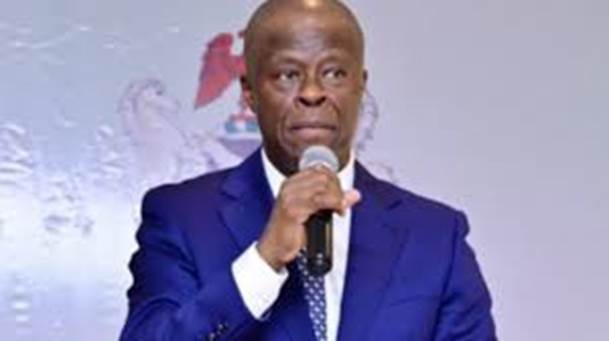
The Minister of Finance and Coordinating Minister of the Economy, Wale Edun, disclosed this on Tuesday while speaking with Bloomberg Television on the sidelines of the 56th World Economic Forum (WEF) in Davos, Switzerland, where global political and business leaders are meeting to discuss economic growth, development, and financial stability.
According to Edun, the government’s economic direction is increasingly focused on revenue generation and domestic resource mobilization, rather than heavy reliance on loans to fund development.
“The issue now is to focus on revenue and domestic resource mobilization. We are hoping to rely less on borrowing,” the minister said.
Edun explained that while Nigeria would continue to access international capital markets when necessary, the priority of the Tinubu administration is to build a stronger internal fiscal base that can sustain public investment without exposing the country to rising global debt costs.
With global interest rates remaining high and financial markets tightening, the government believes the time has come to reduce exposure to external shocks by expanding domestic revenues, improving tax collection, and ensuring that public spending is better aligned with economic priorities.
He said the administration is intensifying efforts to raise tax revenue through reforms designed to close leakages, widen the tax net, and improve efficiency across federal revenue agencies.
A central pillar of the government’s fiscal plan is a comprehensive overhaul of Nigeria’s tax system, which is expected to raise government revenue to 18 per cent of Gross Domestic Product (GDP) by 2027, from about 14 per cent currently.
The minister said the reforms are aimed at ensuring fairness, reducing inefficiencies, and encouraging compliance, while also creating space for increased public investment in infrastructure, healthcare, education, and social protection.
“We are building a tax system that supports growth, encourages investment, and ensures sustainability,” Edun said, noting that the goal is to move Nigeria closer to peer emerging economies in revenue performance.
Since assuming office in May 2023, President Bola Ahmed Tinubu’s administration has introduced a series of far-reaching economic reforms, many of which were politically sensitive but deemed necessary to stabilize public finances.
These include the removal of petrol subsidies, liberalization of the foreign exchange market, and ongoing changes to the tax framework to improve transparency and revenue mobilization.
Edun said the reforms are beginning to yield results, with improving fiscal indicators and renewed interest from domestic and foreign investors.
“The objective is to modernize the economy, restore confidence, and create a system that rewards productivity rather than rent-seeking,” he said.
International financial institutions have begun to acknowledge the early impact of the reforms. The International Monetary Fund (IMF) recently revised Nigeria’s growth outlook upward, projecting 4.4 per cent growth in 2026, compared with an estimated 4.2 per cent in 2025.
Despite continued pressure from weaker global oil prices, the IMF said Nigeria’s reforms are expected to support revenue stability and fiscal sustainability, helping the country reduce its dependence on debt financing over the medium term.
Oil remains Nigeria’s main source of foreign exchange earnings, making diversification and non-oil revenue growth central to the government’s economic strategy.
Edun said Nigeria’s engagement at WEF 2026 is focused on reassuring investors about policy consistency, foreign exchange stability, inflation management and fiscal discipline, key areas of concern for international capital.
He said the government is also using the forum to deepen conversations around long-term investment partnerships, especially in infrastructure, energy transition, agriculture, manufacturing, and digital services.
As part of this renewed push, Nigeria is unveiling its first official national pavilion — Nigeria House Davos — a platform designed to showcase reform progress and present investment opportunities to global investors.
The Federal Government says the combination of reduced borrowing, stronger domestic revenue mobilization, and targeted investment will help strengthen Nigeria’s economic foundations and reduce vulnerability to external shocks.
With reforms now entering a consolidation phase, officials believe the focus on fiscal discipline and investment-led growth will determine the country’s economic trajectory in the years ahead.
For Nigeria, the message from Davos is clear: the era of heavy borrowing is giving way to a strategy built on reforms, revenue, and resilience.