
Eriwe, Ijebu, Ogun State
The Ogun State Government has announced that its World Bank–supported aquaculture intervention programme has generated an estimated ₦9.17 billion in revenue for fish farmers across the state, marking a major boost for local food production, rural incomes, and agricultural value chains.
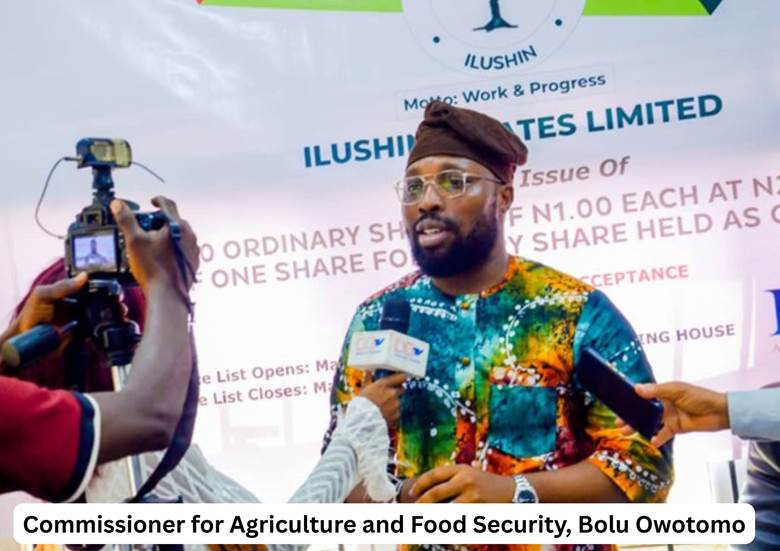
The disclosure was made by the Commissioner for Agriculture and Food Security, Mr Bolu Owotomo, during an inspection tour of Ogun State Economic Transformation Project (OGSTEP)–funded agricultural facilities in fish clusters and farm settlements across the state.
According to the commissioner, the results are the product of targeted government investments in feed subsidies, infrastructure development, and farmer capacity building, designed to lower production costs, improve output quality, and enhance profitability for small and medium-scale farmers.
Owotomo said 4,256 aquaculture farmers have so far benefited directly from the programme, which focuses on boosting fish production while shielding farmers from the impact of rising input costs.
“As part of the intervention, the state government supplied 195,436 bags of fish feed at a 30 per cent subsidy, representing a direct public investment of ₦2.74 billion,” the commissioner said. “This support has helped farmers stay in production and improve their earnings despite market pressures.”
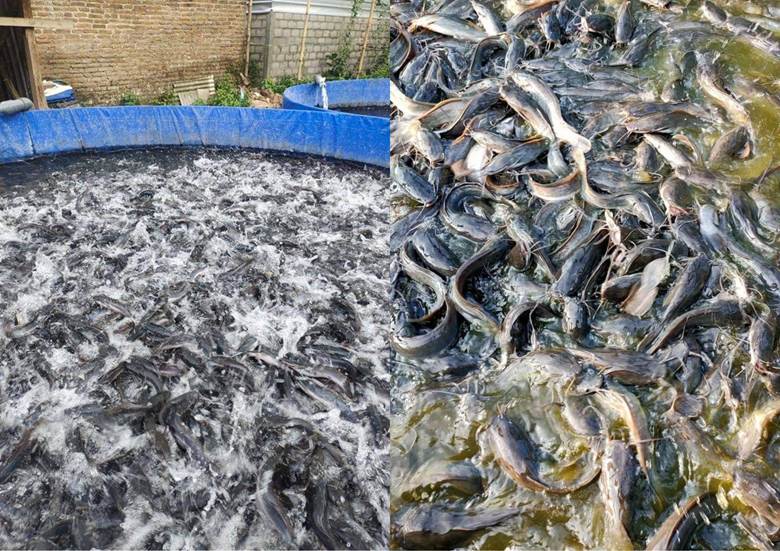
He added that the programme has delivered an estimated 4,256 metric tons of fish, significantly contributing to food security in Ogun State and reducing dependence on imported frozen fish, which has long dominated local markets.
Beyond aquaculture, the commissioner said the OGSTEP programme has also extended support to the poultry value chain, with 1,272 broiler farmers benefitting from subsidised inputs.
A total of 77,703 bags of broiler feed have been distributed to farmers, while others received starter support of 500 birds each and were linked directly to off-takers, a measure aimed at preventing post-harvest losses and stabilising farmer incomes.
Owotomo noted that integrating farmers with markets is a key part of the programme’s design, ensuring that increased production translates into actual income rather than surplus waste.
During the inspection tour, the commissioner visited the Ijebu Development Initiative for Poverty Reduction at the Eriwe Fish Farm Cluster, a hub comprising about 600 fish farmers that has been equipped with modern fish processing and storage facilities.
The infrastructure includes:
- a 5-tonne solar-powered blast freezer,
- a 10-tonne cold room,
- a 500/900-capacity chest freezer,
- four 50kg smoking kilns,
- three 100kg smoking kilns, and
- 400-litre holding tanks, among other equipment.
Owotomo described the facilities as critical to reducing post-harvest losses, improving product quality, and enabling farmers to sell at better prices.
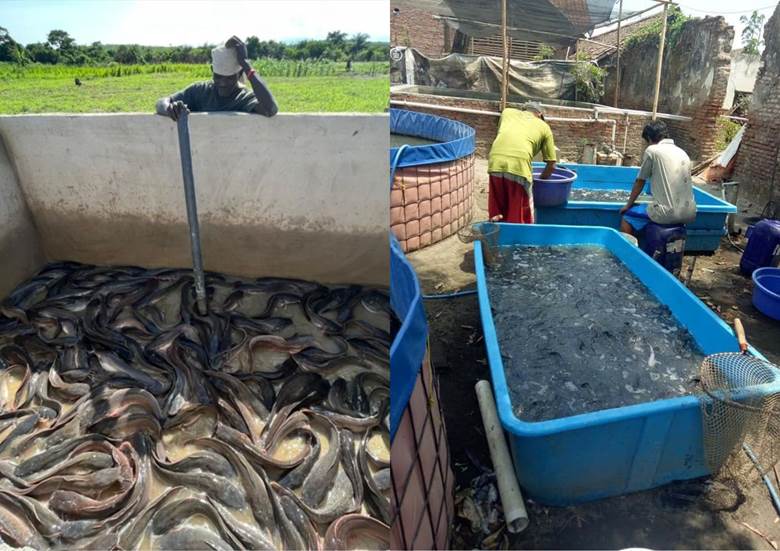
The commissioner also inspected ongoing fish processing projects at the Ikangba Fish Farm Cluster, which has about 1,224 fish farmers, and the Ikenne Fish Farm Cluster, noting that similar facilities are being deployed in Ibiade, Ado-Odo, and Ilashe as part of the statewide rollout.
He stressed that the OGSTEP intervention is inclusive and statewide, targeting farmers in multiple local government areas to ensure balanced growth and price stability across the aquaculture value chain.
“Our goal is to promote value addition, reduce losses, and stabilise prices, not just to increase output,” Owotomo said. “When government support is well-targeted, agriculture becomes profitable for farmers and beneficial to the entire economy.”
The programme received strong endorsement from key stakeholders during the inspection tour. The Special Adviser to the Governor on Agriculture and Food Security, Dr Angel Adelaja, as well as the Chairman of Ikenne Local Government, Jamiu Asimi, praised the initiative for improving livelihoods and strengthening food production in the state.
The Chairman of the Catfish Farmers Association in Ijebu, Mr Lazarus Okole, said the intervention has helped farmers remain in business despite rising costs and has improved access to processing facilities that were previously unavailable.
The Ogun State Government says the project aligns with broader efforts to drive food security, reduce import dependence, create jobs, and strengthen rural economies, while positioning the state as a leading aquaculture hub in southwestern Nigeria.
As OGSTEP continues to expand across the state, officials say the focus will remain on sustaining farmer profitability, attracting private investment, and ensuring that the gains recorded translate into long-term economic transformation for rural communities.