
For decades, global power has often been framed as unipolar, with the United States at its apex. Yet this simplification obscures the real dynamics of the post–World War II order. The world has always been multipolar in material capabilities, with industrial giants, regional powers, and emerging economies, but it became structurally unipolar in monetary, financial, and institutional authority. The U.S. dollar’s dominance in trade, its central role in global finance, and its influence over institutions such as the IMF, World Bank, and SWIFT allowed Washington to write rules that many nations, even powerful ones, had to follow.
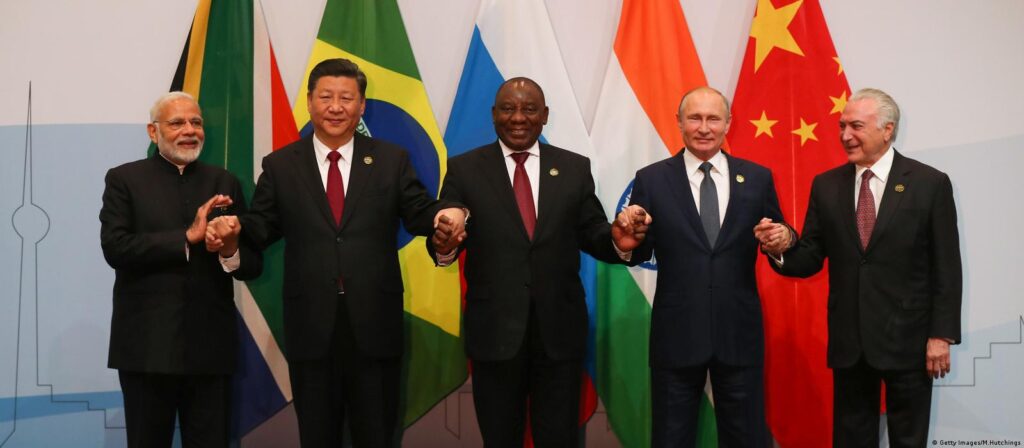
It is within this context that BRICS—Brazil, Russia, India, China, and South Africa—has emerged as a transformative force in global development and governance. What began as a conceptual grouping of fast-growing economies in 2001 has evolved into a robust institutional bloc. Annual summits, ministerial meetings, the creation of the New Development Bank (NDB), and the Contingent Reserve Arrangement (CRA) have cemented BRICS’ operational significance. The 2024 expansion, welcoming Egypt, Ethiopia, Iran, Saudi Arabia, and the UAE, demonstrates BRICS’ ambition to shape a more pluralistic and multipolar global order.
Why BRICS Matters
BRICS is far more than a forum for discussion; it is a strategic platform that advances South–South cooperation and development autonomy.
Development Finance Without Conditionalities: Through the NDB, BRICS offers infrastructure and industrial funding without the strict policy strings often attached to Western institutions. This expands policy space and sovereignty for developing countries.
Monetary Plurality: By promoting trade in local currencies and developing alternative payment systems, BRICS gradually reduces global dependence on the dollar. This is not a revolution but a structural recalibration that erodes unilateral financial leverage over time.
Multipolar Agenda-Setting: BRICS amplifies the voices of underrepresented countries in global governance discussions, from climate finance to trade reform, offering alternatives to the Western-led agenda.
Economic and Resource Diversification: The bloc controls significant shares of global commodities, energy, and industrial production. Through intra-BRICS trade and regional partnerships, it strengthens economic resilience and reduces reliance on Western markets.
Challenges Within BRICS
Despite its promise, BRICS faces structural constraints. Strategic rivalries—particularly between China and India—can limit cohesive action. Economic asymmetries, such as China’s dominance, risk creating dependency patterns within the bloc itself. Institutional limitations—lack of binding policy coordination, enforcement mechanisms, or a common macroeconomic framework—remain a challenge. Finally, narrative ambiguity persists: BRICS presents itself as reformist rather than confrontational, yet even this positioning is interpreted in Washington as implicitly challenging Western authority.
The U.S. Perspective
The perception of BRICS as a threat to U.S. dominance is not hypothetical. Former President Donald Trump reportedly remarked in 2023: “When I heard about this group from BRICS, six countries, basically, I hit them very, very hard. And if they ever really form in a meaningful way, it will end very quickly… We can never let anyone play games with us.” While couched in political rhetoric, the statement reflects a real concern in Washington: the consolidation of BRICS’ influence could limit America’s unilateral leverage in trade, finance, and sanctions regimes.
The U.S. challenge from BRICS is structural, not confrontational. By offering alternative development finance, facilitating local-currency trade, and providing options to states outside the Western orbit, BRICS gradually undermines the exclusive privileges of the U.S. dollar. It does not threaten the U.S. economy directly but constrains Washington’s ability to impose unilateral rules globally. In short, BRICS signals a shift from structural dominance to negotiated influence.
Conclusion: Constraint, Not Collapse
BRICS’ rise is not a story of American decline, but of global recalibration. The bloc pluralizes power, diversifies financial and trade systems, and amplifies the voices of developing nations. For policymakers in Washington and beyond, the message is clear: the era of uncontested structural unipolarity is giving way to multipolar cooperation and shared influence. Leadership in this new environment will depend less on unilateral rule-making and more on diplomacy, collaboration, and the ability to operate within a genuinely globalized, multipolar economic and political order.
BRICS is not just a congregation and coalition of emerging economies—it is a symbol of a world increasingly unwilling to play by a single nation’s rules. Its evolution demands recognition, adaptation, and engagement from the U.S. and other long-standing powers, signaling a profound transformation in the architecture of global power.