
By Olukunle Adewumi
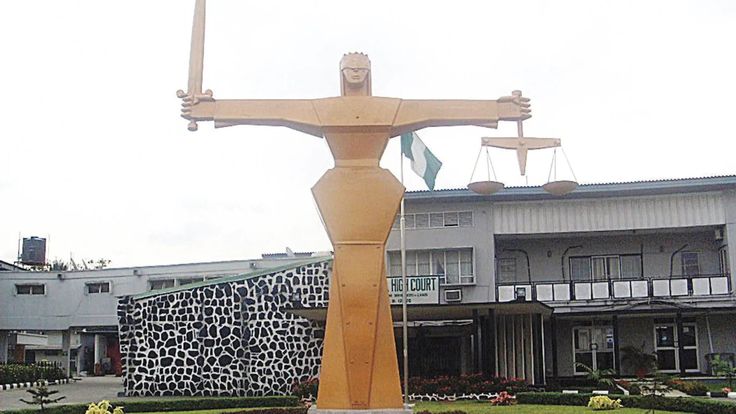
As Nigeria enters 2026, the political atmosphere is once again charged with anticipation ahead of the 2027 general elections. Alongside political actors, parties, and electoral bodies, one institution is poised to play a decisive role in shaping the credibility and outcome of the democratic process: the judiciary.
From pre-election disputes and party primaries to election petitions and post-election litigation, Nigeria’s courts will be central to how political conflicts are resolved. Yet this renewed prominence comes at a time when public trust in the judiciary remains fragile, weighed down by years of controversy, perceived compromise, and institutional strain.
A Judiciary Struggling with Public Confidence
In principle, the judiciary is regarded as the last hope of the common man. In practice, many Nigerians have grown skeptical of its independence. This erosion of confidence can be traced back to key moments in recent history.
In 2016, the Department of State Services (DSS) carried out controversial raids on the homes of several senior judges over allegations of corruption. While the government defended the action as an anti-corruption measure, the spectacle left a lasting imprint on public perception. For many Nigerians, it raised uncomfortable questions about judicial integrity and vulnerability to executive pressure.
The situation was further compounded by the trial of former Chief Justice of Nigeria (CJN), Justice Walter Onnoghen, at the Code of Conduct Tribunal over asset declaration issues. The unprecedented prosecution of the nation’s top judicial officer deepened doubts about whether election tribunals and courts could operate free from political influence.
Since then, the judiciary has carried what many observers describe as a “burden of proof” — an expectation to consistently demonstrate impartiality, courage, and institutional integrity.
2026: The Judiciary Returns to Centre Stage
With political parties preparing for primaries, internal contests, and eventual general elections, 2026 is expected to be dominated by pre-election litigation. Disputes over party leadership, candidate selection, zoning arrangements, and nomination processes traditionally find their way into courtrooms.
How the judiciary manages these cases will significantly influence public confidence going into 2027. Courts will be judged not only by the correctness of their decisions, but also by their consistency, transparency, and resistance to political pressure.
Cleaning Up the Image: The Role of the Chief Justice
Every Chief Justice of Nigeria inherits the responsibility of safeguarding the judiciary’s credibility. Since assuming office, the current CJN, Justice Kudirat Kekere-Ekun, has publicly adopted a zero-tolerance stance on corruption within the judiciary.
In several addresses, she has acknowledged that allegations of corruption and perceived bias have weakened public trust and undermined judicial authority. She has warned judicial officers against practices that bring the institution into disrepute, stressing that “the legitimacy of the judiciary rests on the credibility of those who serve within it.”
Justice Kekere-Ekun has pledged decisive action against any judicial officer found wanting, framing integrity as both an individual and institutional obligation.
Her position carries added weight given her own experience. In 2020, she delivered the lead judgment that declared Hope Uzodinma governor of Imo State — a decision that sparked intense public debate and controversy. That episode placed her personally under scrutiny, underscoring the pressures facing judges in politically sensitive cases.
Judicial Independence in Practice
Beyond rhetoric, the CJN has taken concrete steps that have drawn public attention. She intervened to halt attempts by the Imo State governor to bypass constitutional seniority in appointing an acting Chief Judge. She also acted against efforts by the Benue State House of Assembly to remove the state’s Chief Judge without due process.
These actions were widely interpreted as signals that political interference in judicial affairs would not be tolerated.
Addressing newly sworn-in judges in 2025, Justice Kekere-Ekun urged them to deliver judgments that are “reasoned, impartial, and courageous,” reminding them that every judge bears part of the judiciary’s institutional burden and honour.
Judicial Appointments and Integrity Screening
Public interest has also focused on how judges are appointed. In December 2025, reports emerged claiming that 34 lawyers seeking elevation to the bench had been disqualified for failing integrity tests. While the National Judicial Council (NJC) later clarified the report, it confirmed that some candidates were discontinued at the Federal Judicial Service Commission (FJSC) stage due to adverse findings from petitions, while others failed to meet qualifying benchmarks.
Though the initial report was corrected, the episode highlighted growing public scrutiny of judicial appointments and the demand for transparency in the process.
Speed of Justice and Digital Reform
Another long-standing challenge confronting the judiciary is delay in the administration of justice. Compared with other jurisdictions, Nigeria’s courts — including the Supreme Court — have historically relied on manual record-keeping, creating inefficiencies and opportunities for manipulation.
Missing files, delayed listings, and administrative bottlenecks have undermined access to justice. Poorly paid court staff have often been identified as vulnerable points within the system.
In response, the CJN has initiated reforms aimed at modernisation. These include the creation of Court Record Processing Units, Central Information Units to improve access to case information, and the digitisation of receiving and data entry systems. Although these reforms began at the Supreme Court level, they are gradually being extended to lower courts.
Ekiti and Osun: A Judicial Litmus Test
As political activity intensifies, Ekiti and Osun states are emerging as potential flashpoints. Historically, election cycles are accompanied by internal party disputes, conflicting court orders, and jurisdictional confusion.
Nigeria has seen repeated instances of courts of coordinate jurisdiction issuing contradictory rulings, placing institutions like INEC in impossible positions. In Rivers State, for example, conflicting Federal High Court orders over voter registration data left electoral authorities uncertain about which ruling to obey. Similarly, disputes surrounding the PDP’s planned national convention in 2025 were marked by contradictory judicial pronouncements.
Such precedents have contributed to perceptions of chaos and inconsistency within the judicial system.
When the Judiciary Rose to the Occasion
Yet history also records moments when Nigeria’s judiciary asserted its independence decisively. Between 2003 and 2011, courts overturned several governorship elections found to be riddled with irregularities. Beneficiaries of such rulings included Kayode Fayemi (Ekiti), Rauf Aregbesola (Osun), and Peter Obi (Anambra).
Perhaps the most notable example was the Supreme Court’s 2006 decision that removed Andy Uba — a close ally of then-President Olusegun Obasanjo — and reinstated Peter Obi. That ruling was widely seen as a bold assertion of judicial independence, demonstrating that even powerful political interests could be checked by the courts.
Justice Kekere-Ekun has repeatedly warned judges against issuing conflicting orders, promising disciplinary action where necessary. As Ekiti and Osun move deeper into electioneering activity, how firmly this warning is enforced will be closely watched.
The role of the judiciary in the 2026 and 2027 election cycle cannot be overstated. Many Nigerians believe their votes no longer count due to manipulation and electoral malpractice. In this environment, the courts may once again become the last line of defense for democratic legitimacy.
Whether the judiciary can reclaim that trust depends on its willingness to act impartially, consistently, and courageously. If it rises to the task, it may restore faith in the electoral process. If it falters, public disillusionment may deepen.
In 2026, Nigeria’s judiciary will not merely interpret the law. It is standing trial in the court of public opinion.