

At least six people have been killed in recent attacks by bandits across Niger and Benue states, while authorities in Katsina defended releasing suspected bandits under ongoing peace agreements. The incidents underscore persistent insecurity in Nigeria’s North-Central and North-West regions, despite ongoing military operations and state-level efforts to contain armed groups.
In Niger State, at least four residents were killed during an early morning raid on January 10, 2026, in Damala village, Woko district, Borgu Local Government Area. Gunmen reportedly set shops ablaze, rustled an unspecified number of cattle, and fled the scene.
Niger State Police Public Relations Officer Wasiu Abiodun confirmed the attack, saying security forces promptly responded, launched a clearance operation, and intensified monitoring to prevent further incidents. “Security agencies promptly responded to the incident. A clearance operation is ongoing, and monitoring has been intensified to ensure the safety of residents,” Abiodun said.
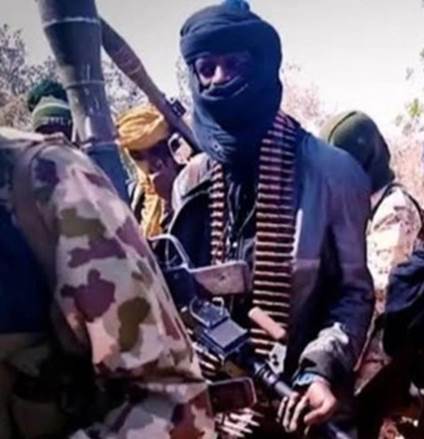
In Benue State, suspected armed herders attacked a team of security operatives in Udeku community, Kwande Local Government Area, on the same day. A soldier and a Nigeria Security and Civil Defence Corps (NSCDC) officer were killed while returning from filling cooking gas. Their charred bodies were recovered by community members and taken to the mortuary at Jato Aka. NSCDC Public Relations Officer Michael Ejelikwu confirmed the deaths, identifying one of the personnel as CCA Tijani Idris, seconded to Operation Whirl Stroke. “Yes, unfortunately, I can confirm that Fulani militias attacked three security personnel attached to Operation Whirl Stroke and killed two of them,” Ejelikwu stated.
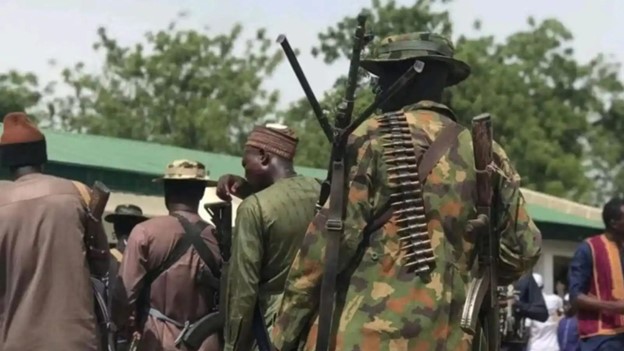
Meanwhile, Katsina State authorities defended the release of 70 individuals accused of involvement in banditry, describing the move as part of a broader peace agreement. Commissioner for Internal Security and Home Affairs Nasir Muazu said the release consolidated peace deals across at least 15 local government areas, enabling the return of roughly 1,000 abducted persons.
“All over the world, after wars, prisoner exchanges usually take place. During Nigeria’s civil war, prisoners were exchanged, just as it happened in negotiations involving Boko Haram,” Muazu explained, citing historical precedence to justify the release.
Bandit attacks have intensified in recent months, with reports of mass kidnappings, village raids, and killings increasingly common across North-Central and North-Western states. In November 2025, over 250 students and staff were abducted from a Catholic school in Niger State, though they were later released in two batches.
The security landscape is further complicated by farmer-herder clashes, jihadist insurgencies in the northeast, and separatist movements in the southeast.
Despite these challenges, the Nigerian Army has reported improvements in certain areas. Brigadier General Mustapha Jimoh, Commander of One Brigade in Gusau, Zamfara State, said bandit and terrorist activity has been reduced to “the barest minimum” thanks to Operation Fansan Yamma and collaboration with local communities. “You can all witness that you can travel from Funtua to Gusau, Gusau to Sokoto without any threat… the level of insecurity in Zamfara State has reduced to the minimum,” he said.
Security agencies across Niger, Benue, Zamfara, and Katsina continue clearance and monitoring operations, while state governments pursue negotiations and peace deals with armed groups.
The effectiveness of these measures, including the release of suspected bandits in Katsina, will play a crucial role in restoring normalcy and stabilising affected communities. Authorities insist that balancing enforcement with negotiation remains essential to tackling insecurity in the region. As Nigeria grapples with repeated attacks and kidnappings, the coming weeks will be critical in determining whether combined military and diplomatic strategies can stem the tide of violence and protect residents i