
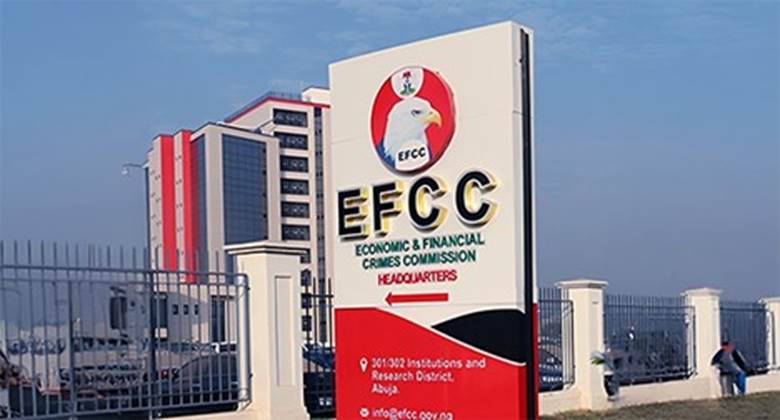
The Economic and Financial Crimes Commission (EFCC) has attributed delays in prosecuting certain high-profile corruption cases to the complexity of investigations and the need for credible, court-admissible evidence. EFCC Chairman Ola Olukoyede spoke on the matter during an interview on Sunday Politics, aired on Channels Television on January 12, 2026.
According to Olukoyede, cases involving politically exposed persons (PEPs) or public officials often require tracing assets across borders, analyzing intricate financial records, and coordinating with multiple agencies. “In 48 hours, I can investigate and arraign a cybercriminal. It is just a matter of getting the devices and all that, and I am done. But when it comes to politically exposed persons or public corruption or high-profile corruption, it takes time, and I can’t go to court when I am not ready,” he explained.
The EFCC chairman dismissed claims that the commission selectively targets opposition figures while shielding influential individuals. He cited the example of former Minister of Justice and Attorney-General of the Federation, Abubakar Malami, who had alleged political persecution, stressing that the agency operates without personal or political bias.
“There is nothing personal in this matter,” Olukoyede said, adding: “If Nigeria is to move forward, all of us must agree that this fight must be fought without being partisan.” He reaffirmed that anti-corruption efforts must remain impartial to ensure public confidence and the rule of law.
Addressing concerns about his own integrity, Olukoyede said he has never benefited from corruption in his public service career, which includes roles as Chief of Staff and Secretary within the commission. “I’ve never been involved in any fraudulent activity… You can’t trace any asset to me, nor any member of my family, as a matter of principle,” he stated, inviting Nigerians to independently verify his record.
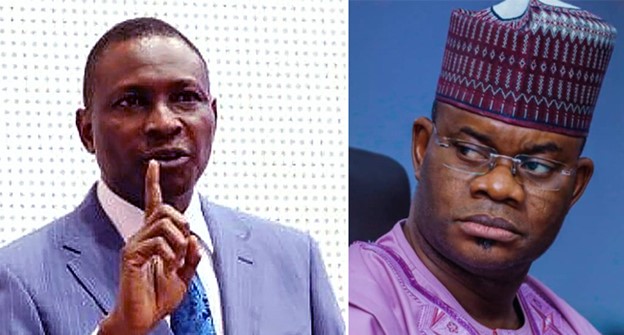
Olukoyede provided an update on ongoing high-profile prosecutions, including cases against former Kogi State Governor Yahaya Bello. The EFCC has filed multiple charges, including:
- A 16-count property fraud case valued at ₦110 billion
- A 19-count fraud and money laundering case totaling ₦80.2 billion
The commission also alleged that Bello transferred $720,000 from the Kogi State Government’s account to a bureau de change as an advance for his child’s school fees. Olukoyede emphasised that the EFCC has completed its investigative duties, and the cases are now before the Federal High Court. “I have three cases against Yahaya Bello. Am I the judge who would determine the conviction? I have done my work. The case is still in court,” he said.
The EFCC highlighted the contrast between cybercrime and high-profile corruption investigations. While cybercrime cases can be investigated and arraigned within 48 hours, corruption cases often involve complex financial transactions, multiple suspects, and assets spread across jurisdictions. Thorough investigations are necessary to ensure charges are credible, sustainable in court, and legally defensible.
Olukoyede reiterated, “In 48 hours, I can investigate and arraign a cybercriminal. But when it comes to politically exposed persons or public corruption or high-profile corruption, it takes time, and I can’t go to court when I am not ready.”
The EFCC affirmed its continued commitment to pursuing all ongoing investigations and prosecutions in accordance with its mandate. Cases involving former governors and other politically exposed persons remain in court, where due process is being strictly observed.
The commission emphasized that all actions are guided by the principle of ensuring that charges brought to court are thorough, legally sound, and enforceable, reflecting a commitment to both justice and national anti-corruption policy.