
Few days ago, the United States announced it would control and market Venezuelan oil “indefinitely,” selling an initial 30–50 million barrels on global markets and managing the proceeds in U.S.‑controlled accounts. U.S. officials framed this move as essential for stabilizing Venezuela’s economy and rebuilding its oil sector. But the coercive mechanics and political rhetoric accompanying the arrangement suggest something far deeper: a neo‑imperial assertion of control over another state’s sovereign resources, justified by power rather than law or mutual consent. (The Guardian)
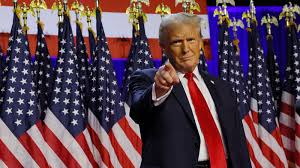
President Donald Trump’s explicit declaration that “the proceeds of oil will be controlled by me” signals a departure from conventional state‑to‑state commerce into unilateral control of economic assets belonging to another nation. In rhetoric and practice, this resembles a form of external state capture—the capture of decision‑making authority over a state’s most strategic resource by a dominant external power—while functioning as a contemporary modality of neo‑imperialism. In this context, the oil deal is not merely an economic agreement; it is a structural entrenchment of influence. (Axios)
A critical feature of the arrangement is its coercive foundation. Prior to the announcement, U.S. forces removed Venezuelan President Nicolás Maduro from power in a military operation. Rather than an equal negotiation between sovereign governments, the interim authorities in Caracas found themselves negotiating from a position of stark asymmetry. Months of sweeping sanctions and maritime interdictions had already choked Venezuelan exports and isolated the state economically. Under these conditions, conditioning access to the country’s principal export on terms dictated by Washington is coercive by design, not incidental. (Reuters)
The declared mechanism is clear: proceeds from oil sales will first settle in accounts controlled by the United States, and Washington will determine how those proceeds are disbursed, ostensibly for the “benefit” of both Venezuelans and Americans. Beyond economics, the deal is tied to political conditions, including exclusive economic alignment with the U.S. at the expense of longstanding partnerships with China, Russia, Iran, and Cuba. This transforms what might otherwise be an energy trade into a strategic instrument for reshaping Venezuela’s geopolitical orientation. (AInvest)
From the standpoint of international law and political theory, the arrangement raises profound questions about sovereignty over natural resources. Under the doctrine of permanent sovereignty over natural resources—a principle recognized in international law—states have the right to control and benefit from resources within their territory. This principle is a cornerstone of the right to self‑determination, and it has been expressly upheld in multiple United Nations resolutions. Under those norms, control and direction of oil revenues ordinarily lie with Venezuela, not a foreign power. (valleyinternational.net)
Yet the current situation subordinates these norms to coercive power. By leveraging military intervention, economic blockade, and conditional access to markets, the United States effectively commands economic outcomes and resource flows in another country. Trump’s rhetoric—that proceeds will be controlled under U.S. direction—echoes concessionary dynamics of an earlier era of resource imperialism, where Western firms managed production and marketing in host countries, often to the detriment of local sovereign agency. (Al Jazeera)
This reliance on coercion carries broader implications for the international system. Coercive hegemony undermines normative commitments to sovereignty, multilateral dispute resolution, and institutional arbitration. When a preeminent power asserts unilateral control over another state’s resources, it implicitly normalizes power as the primary determinant of rights and outcomes. That logic does not remain confined to one case; it resonates with the rationales invoked by other states to justify their own interventionist actions. In other words, when coercion becomes an accepted instrument for ordering international relations, it contributes to a Hobbesian state of nature at the systemic level—where law is subordinate to power, and self‑help becomes the default strategy of states. (Springer Link)
Indeed, parallels can be drawn with recent Russian actions in Ukraine and Chinese posturing toward Taiwan. While contexts differ significantly, the structural logic is analogous: powerful states asserting control over strategic territory and resources when they perceive normative constraints to be weak or unenforceable. This trend reflects a crisis in the international normative order, where the primacy of force increasingly overshadows legal and institutional mechanisms designed to regulate interstate conduct.
Economically and politically, coercion‑based hegemony is inherently unstable. It relies on sustained enforcement, significant expenditure of political capital, and favorable geostrategic conditions. The maintenance of such arrangements can provoke resistance within the affected state and generate pushback from other powers concerned with precedent and balance. Moreover, global energy transitions and market volatility limit the strategic value of resource dominance over the long term.
In Venezuela’s case, heavy crude production requires substantial capital and technological investment to restore output—efforts unlikely to be lucrative in a world gradually shifting toward renewable energy sources. Yet the insistence on control underscores that this policy is not primarily about immediate economic efficiency; it is about locking in geopolitical leverage and reshaping the regional order.
The Venezuela oil arrangement thus marks a critical inflection point. It reveals how coercive power—when wielded without regard for established legal norms—can structure economic and political outcomes in ways that erode the very foundations of a rules‑based international system. For scholars and policymakers alike, the challenge is to reconcile strategic interests with enduring commitments to sovereignty and institutional order. Without such reconciliation, the international system risks evolving toward a condition where coercion, not law, defines the permissible scope of state behavior—worsening the instability that normative frameworks once sought to mitigate.