
Abuja/Washington
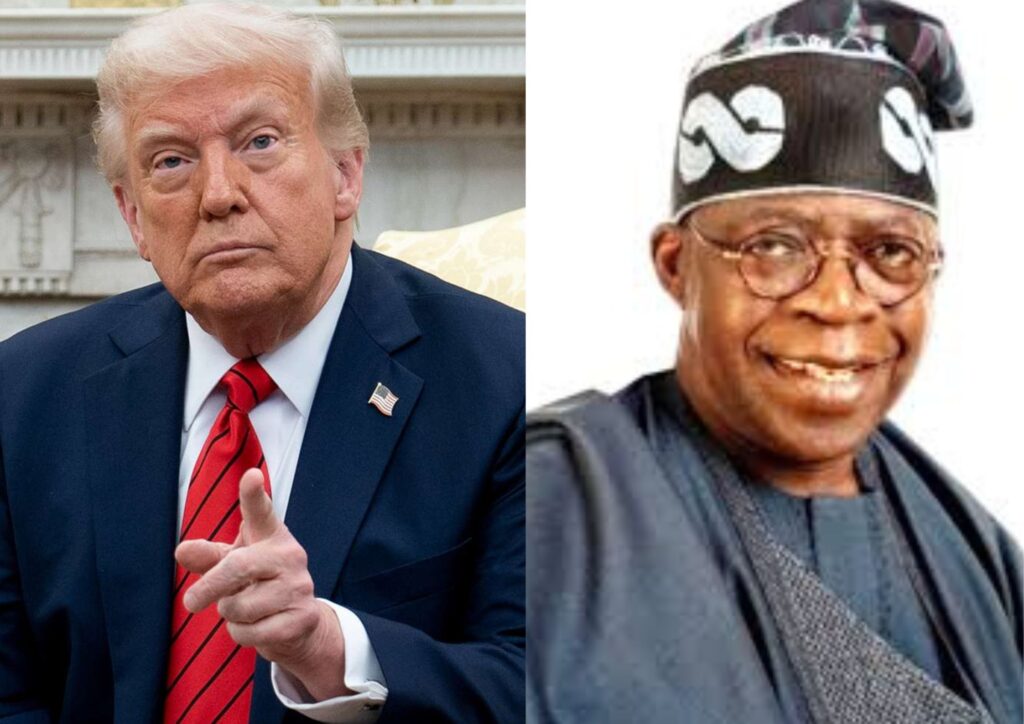
U.S. President Donald Trump has signaled that additional American military strikes could be carried out in Nigeria if attacks on Christians persist, escalating Washington’s involvement in West Africa’s security environment. The remarks were made in an interview with The New York Times, published January 8, 2026, following a Christmas Day strike targeting militants linked to the Islamic State in northwestern Nigeria.
On December 25, 2025, U.S. forces conducted a precision missile strike against Lakurawa, a militant group operating in Sokoto State near the border with Niger. The Nigerian government described the operation as a joint counterterrorism action, emphasizing that the strike targeted extremists rather than being motivated by religion.
President Trump, however, framed the strike in explicitly religious terms:
“I’d love to make it a one-time strike… But if they continue to kill Christians, it will be a many-time strike.”
Trump acknowledged that Muslims were also affected by the violence but maintained that Christians were the primary victims. Reports suggest that around 100 militants may have been killed, though independent verification remains limited. Debris from the missile strike reportedly landed up to 500 miles south, injuring three civilians in a hotel, underscoring the operational risks of foreign military interventions.
Nigeria’s population of over 230 million is roughly evenly split between Christians in the south and Muslims in the north. Nigerian authorities have consistently rejected claims of systematic Christian persecution, stressing that armed extremist groups target both communities indiscriminately.
Local analysts highlight that Nigeria’s security challenges are multidimensional, rooted in governance gaps, poverty, and state absence.
“Because of governance issues… the level of poverty and absence of the state create a vacuum where armed groups thrive,” said Malik Samuel, researcher at Good Governance Africa.
Experts caution that framing the conflict along religious lines may destabilize local communities and exacerbate tensions in a nation already grappling with insurgencies, banditry, and kidnappings.
Lakurawa was designated a terrorist organization in January 2025. It has historically exerted coercive control over local populations, extorted residents, and enforced extreme interpretations of Sharia law. Analysts note that while the U.S. strike demonstrates American resolve, it addresses symptoms rather than root causes.
“Groups like Lakurawa initially received local support as protection against bandits but later turned violent,” said Kato Van Broeckhoven of the UN Institute for Disarmament Research.
Experts warn that repeated foreign interventions cannot substitute for long-term governance reforms, law enforcement capacity, or socio-economic development. Without addressing structural vulnerabilities, armed groups are likely to re-emerge.
Trump’s statements and the Christmas strike have heightened diplomatic sensitivity between Washington and Abuja. Nigeria has expressed willingness to cooperate on counterterrorism but remains wary of narratives that overemphasize religious targeting.
International observers and humanitarian organizations have raised concerns regarding:
- The legality and precision of unilateral military actions in sovereign nations.
- Risks to civilian populations and disruption of local communities.
- Potential to complicate broader counterterrorism efforts if interventions are perceived as biased.
Several factors will shape Nigeria’s security trajectory and U.S. involvement in the coming months:
- Potential for Additional Strikes: Trump’s warning of “many-time strikes” suggests continued U.S. military engagement if attacks on Christians persist.
- Diplomatic Coordination: Abuja may need to navigate relations carefully, balancing security cooperation with concerns about religious framing.
- Governance and Security Reform: Sustainable stability will require strengthening state institutions, policing, and socio-economic development to reduce vulnerabilities.
- Regional and International Oversight: Multilateral actors may monitor U.S. operations to ensure civilian protection and compliance with international law.
- Media and Information Transparency: Accurate reporting on militant activity, casualties, and humanitarian impacts will be crucial to prevent misinformation and escalation.
Trump’s statements underscore the intersection of religion, security, and foreign intervention, offering a stark reminder that military action alone cannot resolve complex societal crises.
For Nigeria and its international partners, the challenge remains: balancing counterterrorism efforts with governance reform and civilian protection, while navigating the geopolitical sensitivities of external military involvement.
The coming weeks will test whether military actions translate into sustainable security outcomes, or whether broader reforms—political, economic, and social—are required to address the root causes of extremism.