
Abuja, Nigeria
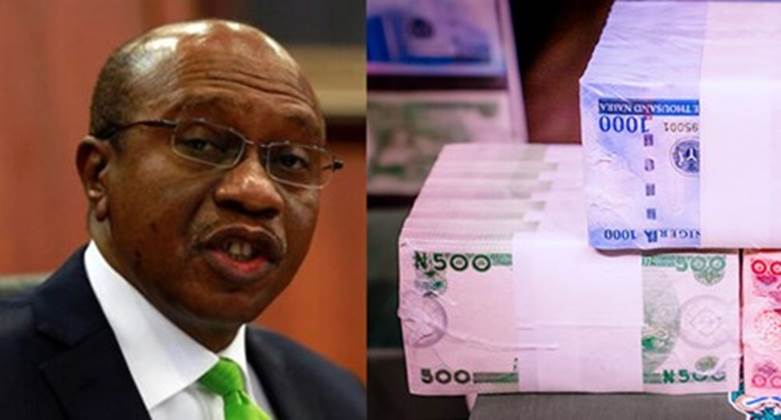
The legal proceedings surrounding the controversial naira redesign have entered a critical phase, as a Federal Capital Territory (FCT) High Court has fixed 10 hearing days to conclude the trial of former Central Bank of Nigeria (CBN) governor Godwin Emefiele over alleged corruption linked to the currency overhaul.
Justice Maryanne Anenih announced the schedule following an agreement between the Economic and Financial Crimes Commission (EFCC) and Emefiele’s legal team. Counsel to the EFCC, Rotimi Oyedepo (SAN), and Emefiele’s lawyer, Olalekan Ojo (SAN), jointly proposed the dates.
The trial, which began in 2024, is now set to continue on February 3 and 10; April 1 and 2; May 11 to 14; and June 9 and 10, with the court expecting that the proceedings will be concluded within these sessions. Justice Anenih urged both parties to respect the dates and assured that the court would make the necessary accommodations to ensure smooth proceedings.
At Wednesday’s hearing, EFCC witness Emere Chinedu, who led the inter-agency probe panel investigating Emefiele, told the court that the redesign of the naira was approved by the Presidency under former President Muhammadu Buhari.
Chinedu said the approval was communicated in writing but came with a specific condition: the new notes were to be printed locally within Nigeria, rather than abroad. “The State House gave approval for the naira redesign but with a proviso that it must be done locally,” he stated.
The witness further testified that Emefiele had given six extra-judicial statements while responding to the probe, recorded between October 26 and November 2, 2023, as part of his defence.
During cross-examination, Chinedu declined to respond to Emefiele’s claim that former EFCC chairman Abdulrasheed Bawa had initially proposed the naira redesign to President Buhari. The witness maintained that the EFCC does not have the authority to propose changes to the currency and that any input from the commission would be purely advisory.
Chinedu also admitted that video clips showing Nigerians struggling during the naira redesign—submitted as evidence by the EFCC—were downloaded from the internet. He noted that the videos predated the probe panel and clarified that the panel had not interviewed staff from the television stations that produced the footage.
The court adjourned further cross-examination of Chinedu to February 3.
The naira redesign, announced by the CBN in 2022, involved the introduction of new notes and the withdrawal of old currency from circulation. While the initiative was framed as a measure to curb counterfeiting and improve the cashless economy, it drew widespread criticism from Nigerians who experienced cash shortages, long queues, and economic disruption.
Emefiele, who served as CBN governor from 2014 to 2023, has consistently defended the policy, arguing that it was necessary for Nigeria’s monetary stability. The EFCC, however, alleges that the redesign was mired in corrupt practices, sparking one of the most high-profile financial trials in recent Nigerian history.
Political analysts note that the trial has implications beyond Emefiele’s personal accountability. “This case is symbolic of wider governance challenges in Nigeria,” said Dr. Ibrahim Sule, a political economist in Abuja. “It touches on the integrity of monetary policy, institutional accountability, and how policy decisions impact ordinary citizens.”
As the court prepares to conclude the trial over the next few months, all eyes remain on the proceedings, which are expected to provide clarity on the alleged corruption, the role of key officials, and the decision-making process behind one of Nigeria’s most debated financial reforms in recent years.